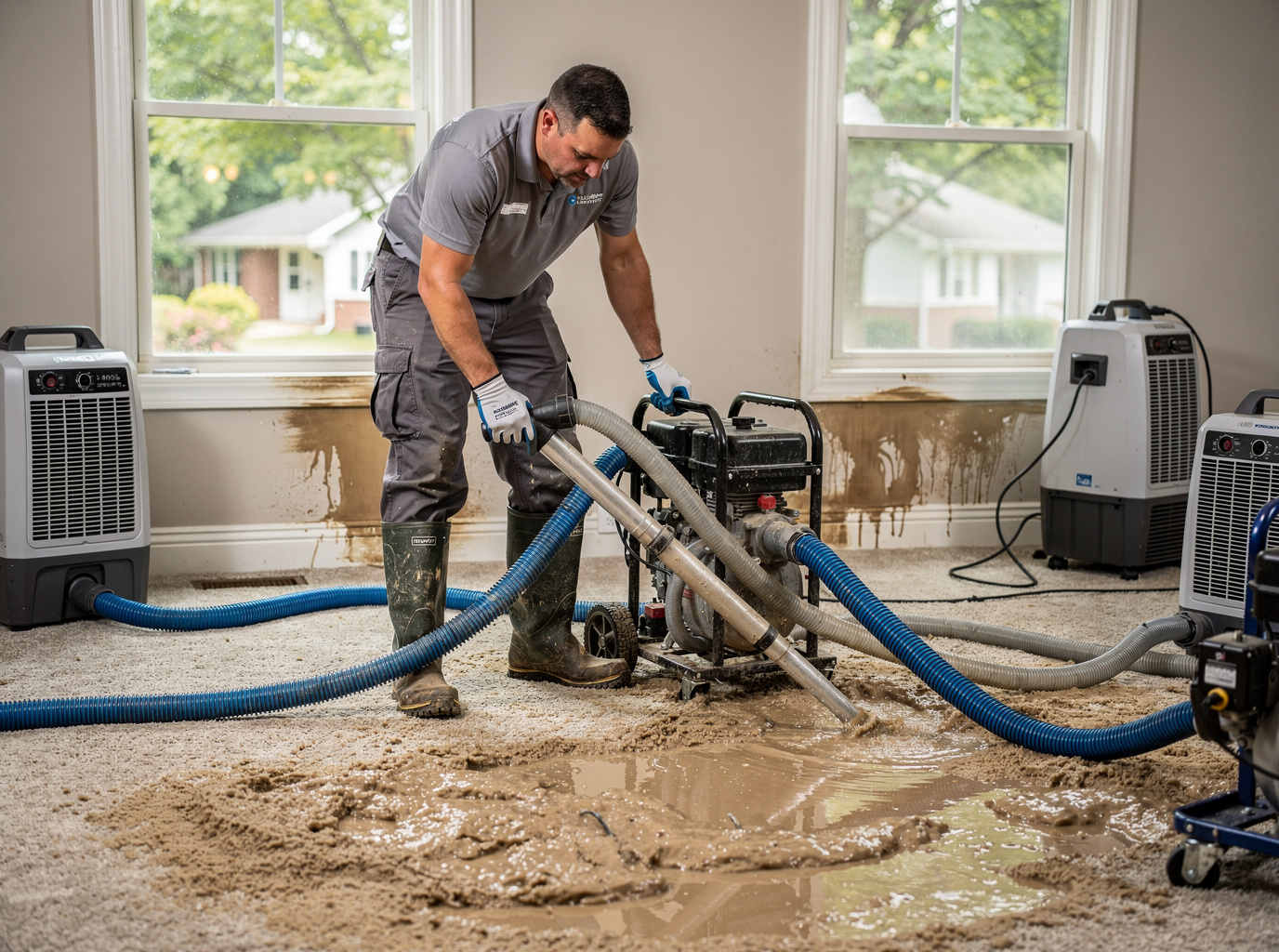
Lexington's humid subtropical climate brings hot summers that trap moisture inside older brick and plaster homes common in Chevy Chase and Ashland Estate neighborhoods. Water from roof leaks or burst pipes quickly saturates lath and plaster, leading to hidden pockets that standard fans miss. Fayette County soil stays damp through mild winters, so basements near the Kentucky Horse Park or Keeneland often see seepage after heavy rains that does not happen in drier parts of Louisville.
Homes built before the 1970s in Southland and Beaumont frequently have limited crawlspace access and original cast-iron drains that fail without warning. When water reaches subfloors, it travels along joists toward exterior walls, especially on sloped lots that direct runoff toward foundations. Technicians must pull baseboards early and use moisture meters on multiple layers because surface readings alone miss the real extent of saturation.
Rupp Arena events and downtown construction increase the chance of sudden main-line backups into nearby apartments. In these cases, Category 3 water requires full containment and disposal protocols that differ from clean rainwater jobs. Crews working near the Lexington Cemetery know to check for clay-heavy soil that slows natural drainage and extends drying times by several days compared with sandier lots in Hamburg.
Technician insight
In Lexington, the thing that catches most people out with Water Damage Restoration is how quickly our humid summers push moisture deep into the horsehair plaster walls of 1920s–1950s homes in Chevy Chase and Southland. Homeowners often stop at surface drying, but the clay-heavy Fayette County soil keeps foundations damp for weeks afterward, so we always pull baseboards and check behind cabinets on the first visit.
Southland Basement Seepage After Heavy Rain
Water entered through a cracked foundation wall in a 1940s Southland home following three days of summer storms. We found saturation in the lower three feet of plaster and along the oak subfloor toward the laundry room. Extraction and targeted drying prevented mold from reaching the adjacent kitchen, and the homeowner was able to keep the original hardwood after we dried it in place.
Water Damage Restoration Services We Offer
✓Emergency Water Extraction
Rapid removal of standing water from basements and first floors in Southland and Downtown homes before it reaches electrical systems or spreads to adjacent rooms.
✓Structural Drying and Dehumidification
Targeted drying of plaster walls and hardwood floors common in Chevy Chase properties using equipment sized for Lexington's summer humidity levels.
✓Basement Flood Cleanup
Pumping and sanitizing below-grade spaces in Beaumont and Hamburg where Fayette County clay soil holds water against foundations after storms.
✓Ceiling Leak Repair Preparation
Containment and drying of water-damaged ceilings in multi-story homes near Keeneland to prevent collapse and hidden mold growth in attic spaces.
✓Carpet and Subfloor Restoration
Removal of soaked carpet and pad followed by subfloor drying in older Lexington homes where water travels under baseboards into adjacent rooms.
Water Damage Restoration Cost in Lexington, KY
| Service | Typical Range | What Affects It |
|---|---|---|
| Emergency Extraction Visit | $450–$900 | Higher when Category 3 water or limited access in older Downtown basements |
| Full Structural Drying | $800–$2,200 | Varies with home size, humidity, and number of affected rooms in Southland or Chevy Chase |
| Basement Water Removal | $600–$1,400 | Clay soil and sump pump issues near Keeneland often extend job length |
| Subfloor Drying Add-On | $300–$700 | Required when water migrates under hardwood in pre-1970 Beaumont homes |
Ranges are typical for Lexington, KY and confirmed with an exact written quote before any work starts.
How it works
- 1
On-Site Assessment
Technicians inspect all affected rooms, check moisture levels in walls and floors, and identify the water source while documenting conditions for insurance.
- 2
Water Removal
Pumps and extractors pull standing water from floors and carpets, focusing first on high-traffic areas and electrical hazards in Fayette County homes.
- 3
Drying And Monitoring
Air movers and dehumidifiers run continuously while daily moisture readings track progress in plaster and hardwood typical of older Lexington neighborhoods.
- 4
Final Restoration
Replace or repair damaged materials, treat any remaining moisture, and return the property to pre-loss condition once readings reach safe levels.
Pricing
Upfront written estimates after inspection; final cost depends on water category, square footage, and drying duration.