2026-11-11 · David Harlan
Average Cost to Dry Out a Flooded Lexington Basement
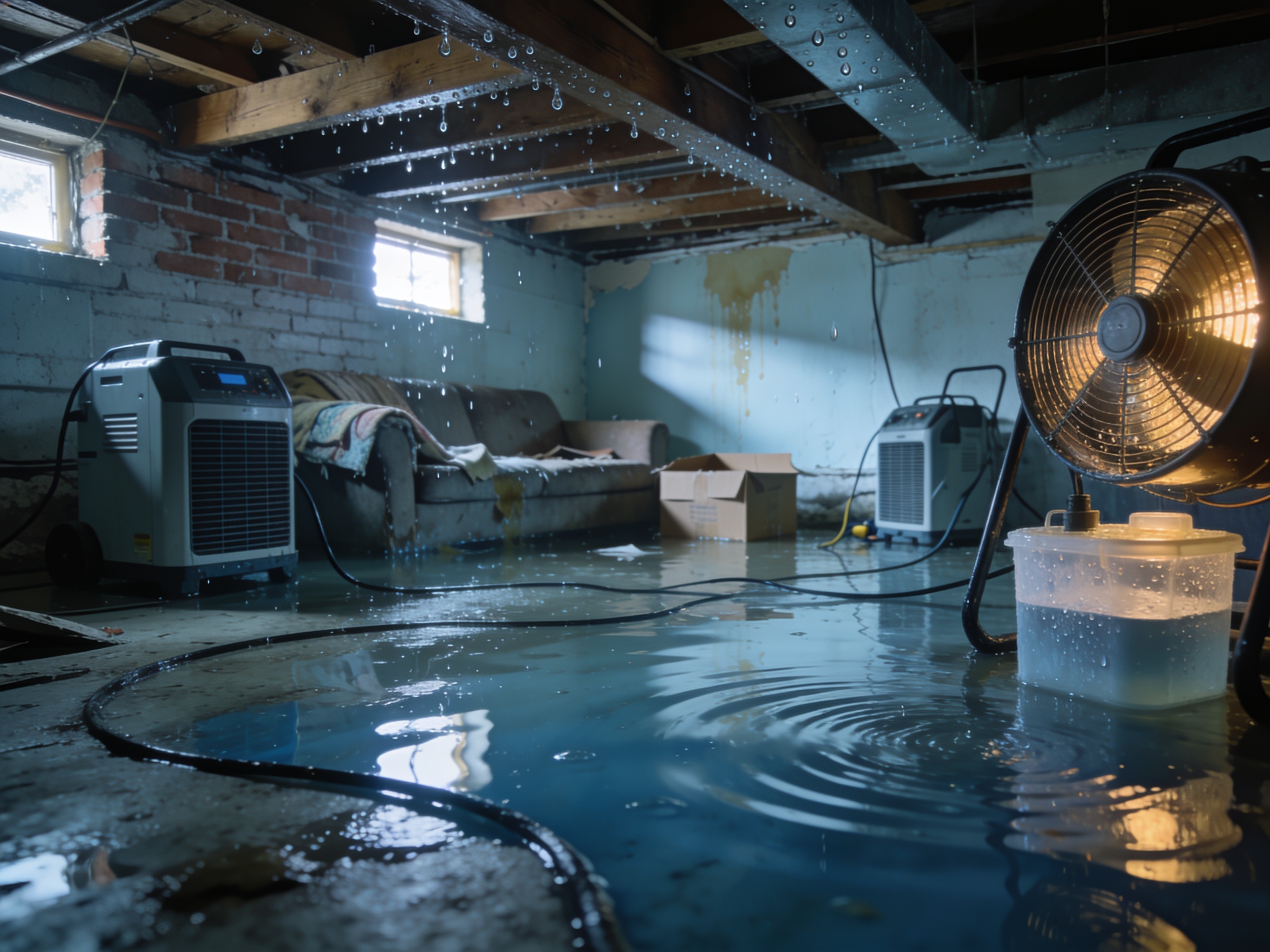
Drying out a flooded basement in Lexington typically costs $1,200 to $4,500. The range depends on water volume, duration of saturation, and whether mold has begun in the 48 hours after flooding. Homes in Southland and Chevy Chase often see higher ends because their 1950s-1970s foundations sit closer to the water table in Fayette County.
Cost Factors Specific to Lexington Homes
Lexington's humid subtropical climate brings sudden summer thunderstorms and occasional winter thaws that push water into basements across Downtown and Hamburg. Older brick and block foundations common in Beaumont and Ashland Estate neighborhoods absorb moisture differently than newer poured walls, extending drying times by days. Equipment needs scale with square footage and depth of water; a 600-square-foot basement with six inches of standing water requires more dehumidifiers and air movers than a shallow seepage event. Soil conditions around Keeneland and the Lexington Cemetery area hold clay that slows drainage, forcing crews to run extraction longer. Homeowners near Rupp Arena or the Kentucky Horse Park face similar issues when heavy rains overwhelm grading around older crawl spaces tied to basements.
Typical Equipment and Labor Breakdown
Professional drying starts with moisture mapping and water extraction, then moves to industrial dehumidifiers and air movers staged for 3-7 days. In Fayette County homes, crews often add floor mats for hardwood subfloors common in Southland properties. Labor runs in shifts because Lexington summers push indoor humidity above 70 percent, slowing evaporation. The process includes daily moisture readings to confirm drywall and insulation have returned below 15 percent. When sump pump failure during heavy rains occurs, additional time is needed to address the continuous inflow before drying can finish.
Seasonal Patterns That Change the Job
Mild winters in Lexington still produce enough freeze-thaw cycles to crack older foundations in Chevy Chase, allowing slow leaks that become costly once water reaches carpet or stored items. Hot, humid summers accelerate mold growth on particleboard and drywall, pushing jobs toward the higher end of the $1,200-$4,500 range if remediation overlaps with drying. Spring rains around the Kentucky Horse Park frequently test sump systems in Hamburg basements, while fall storms hitting Downtown row homes create rapid saturation because shared walls limit airflow. Crews adjust fan placement and dehumidifier capacity based on these patterns rather than using a one-size approach.
Practical Steps Homeowners Can Take First
Shut off power to affected circuits and remove standing water with a wet vac if safe. Move furniture and boxes to dry areas, then photograph everything for records. Open windows only when outdoor humidity is lower than inside, which is rare during Lexington summers. Place fans to create cross-ventilation but avoid spreading moisture into unaffected rooms. For persistent issues tied to roof leaks after Lexington winter storms, address the source before full drying begins. These steps reduce the volume of work but do not replace professional extraction and monitoring in most Fayette County cases.
When Professional Water Damage Restoration Makes Sense
Persistent moisture readings above 20 percent after three days or visible mold on baseboards signal the need for professional water damage restoration. Crews familiar with Lexington's mix of historic and mid-century homes know how to dry lath-and-plaster walls without damaging them. They also coordinate with water damage repair when flooring must be removed. Homeowners in areas like Beaumont or near Keeneland benefit from technicians who track local water tables and typical foundation types rather than generic national guidelines.