2026-11-11 · David Harlan
What Lexington Homeowners Should Know About Sump Pump Failure During Heavy Rains
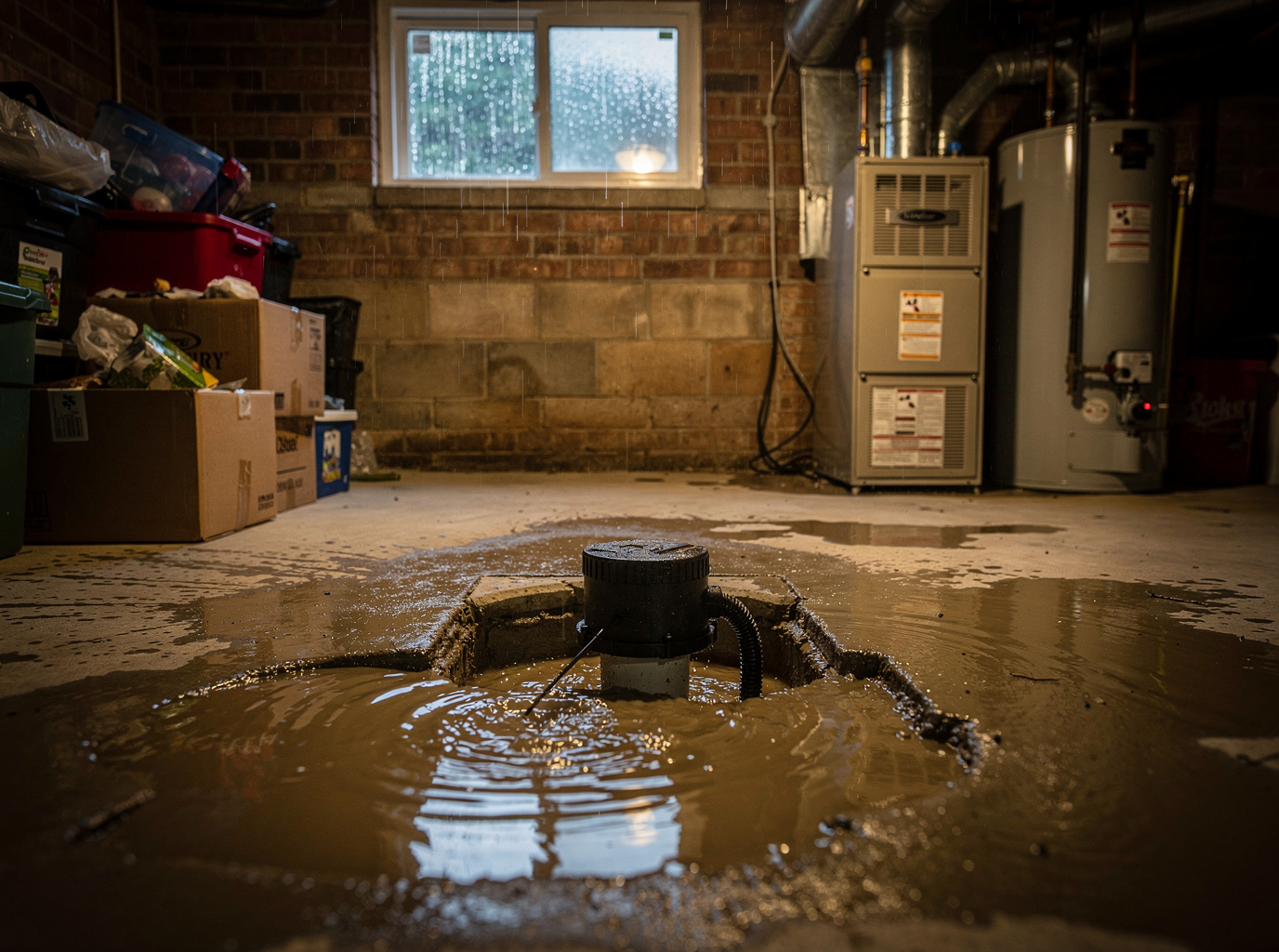
Sump pump failure during heavy rains in Lexington often results in rapid basement flooding, particularly in older homes built on Fayette County's clay-heavy soils where drainage is naturally limited. Homeowners in areas such as Downtown and Beaumont see water enter through foundation cracks once the pump stops moving water away from the house. The humid subtropical climate brings intense summer downpours that can overwhelm systems already strained by mild winter freeze-thaw cycles.
Common Causes of Sump Pump Failure in Lexington's Climate
Heavy rains common to Fayette County push sump pumps beyond their design limits when combined with the region's clay soils that hold moisture longer than sandy ground. Power outages during storms leave many units without backup, especially in Southland and Hamburg where older electrical service can be unreliable. Debris from nearby construction or leaf litter around Kentucky Horse Park and Keeneland properties often clogs intake screens, while float switches corrode faster in the area's humid air. Homes near Ashland Estate and Lexington Cemetery frequently sit on lots with poor grading that directs runoff straight toward foundations rather than away from them.
Mild winters followed by sudden warm spells create ice melt that saturates soil around basements in Chevy Chase, adding unexpected volume to what the pump must handle. Nearby cities like Frankfort and Louisville experience similar patterns, yet Lexington's mix of historic housing stock and newer subdivisions means pumps installed decades ago often lack modern check valves or battery backups. These local conditions turn routine storms into failures more quickly than in drier regions.
Signs Your Sump Pump Is Failing During Heavy Rains
Unusual noises such as grinding or constant cycling during a downpour indicate the motor is struggling against debris or a stuck float in Lexington basements. Water stains on walls or floors near the sump pit appear first in Southland and Beaumont homes when discharge lines back up. A pump that runs but leaves standing water suggests the impeller has worn or the outlet pipe is blocked by sediment common in Fayette County clay.
Homeowners notice musty odors or increased humidity in lower levels after rains, signaling the unit is no longer keeping the space dry. In areas like Hamburg, where newer builds sit closer to the water table, a pump that fails to activate at all points to electrical issues or a dead float switch. Checking the unit after each heavy rain reveals these early warnings before full flooding occurs.
Steps to Take When Sump Pump Failure Occurs
Shut off power to the pump and inspect the pit for debris or a jammed float as soon as water appears. Clear the intake screen and test the discharge line for clogs caused by local soil particles. If water continues rising, move valuables to higher ground and contact professionals for water damage restoration to limit secondary mold growth in humid conditions.
Document the water level and any damage with photos for insurance purposes before cleanup begins. For homes in Downtown or near Rupp Arena where space is tight, quick extraction prevents structural issues in older foundations. Follow up by checking nearby properties along Keeneland or the Kentucky Horse Park for similar drainage patterns that may have contributed to the overload.
Preventing Future Failures in Fayette County Homes
Installing a battery backup system addresses power outages common during Lexington storms and keeps the pump running when grid power fails. Annual testing before summer rains and after winter thaws catches problems early in neighborhoods like Southland and Chevy Chase. Upgrading to a pump rated for higher gallons-per-minute output suits the intense rainfall totals Fayette County receives.