2026-11-11 · David Harlan
How to Spot and Fix Roof Leaks After Lexington Winter Storms
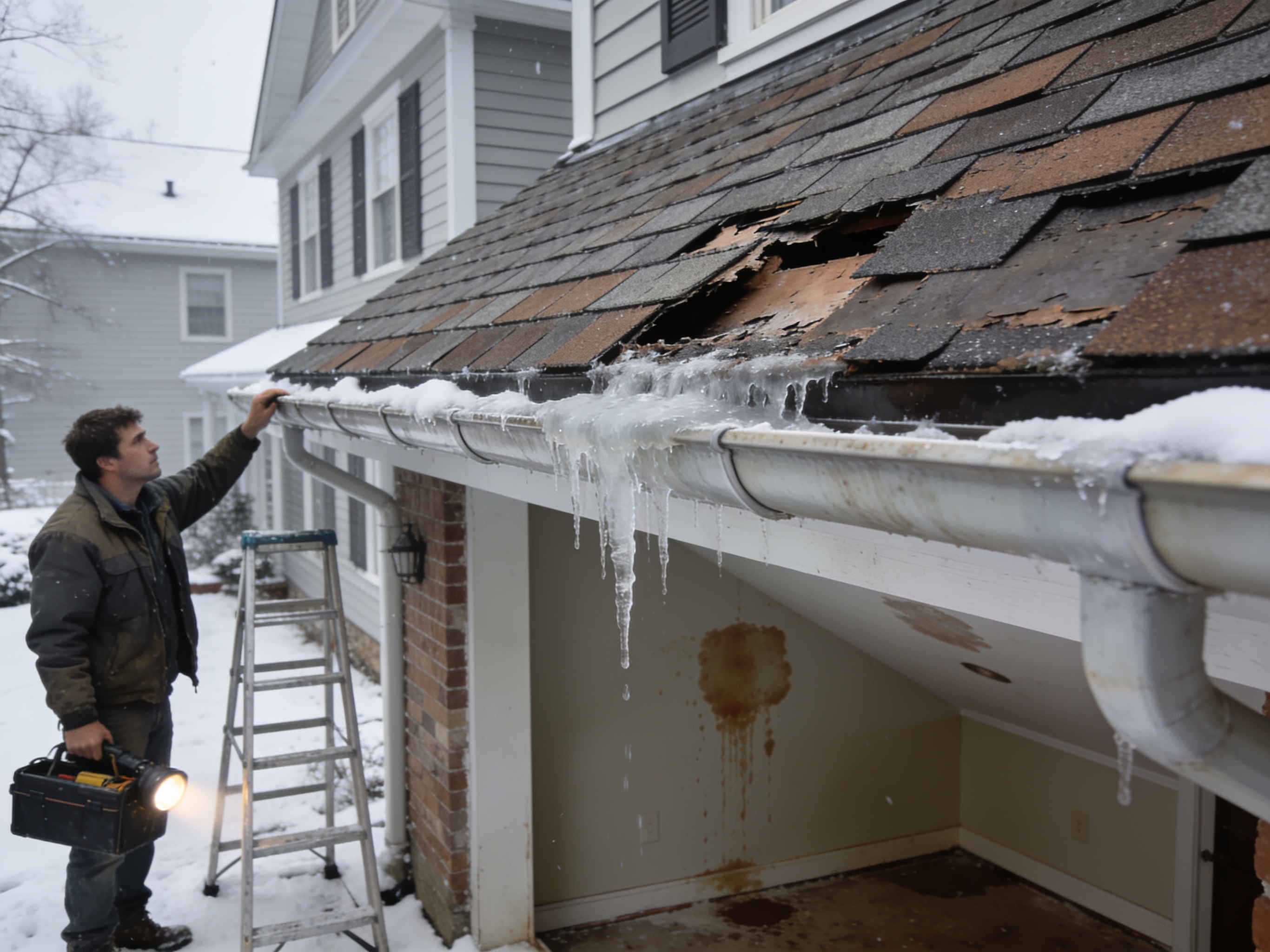
After Lexington winter storms, roof leaks typically surface within 48–72 hours once daytime temperatures climb above freezing and meltwater backs up behind ice dams. Homes in Fayette County neighborhoods such as Chevy Chase and Southland, built between 1950 and 1980, often have asphalt shingles that have reached the 15–20 year mark, making them especially vulnerable to the freeze-thaw cycles common in the region’s humid subtropical climate.
Spotting Early Signs of Roof Leaks
Walk through the attic on a sunny day after a storm and look for dark water stains along rafters or insulation that feels damp to the touch. In Lexington homes near Keeneland and the Kentucky Horse Park, where many roofs face north, check the north-facing slopes first because they stay shaded longer and hold ice longer. Water may also appear as yellow-brown rings on second-floor ceilings in rooms directly below the ridge. Pay attention to any musty odor that develops within a week; that signals trapped moisture in older plaster or drywall common in Beaumont and Hamburg properties. If you notice daylight coming through the roof deck in the attic, the leak has already compromised the underlayment and needs prompt attention.
How Winter Storms Create Ice Dams in Fayette County
Lexington receives several winter events each year that drop 2–6 inches of snow followed by a quick warm-up. When nighttime lows dip below 25°F and daytime highs reach the mid-40s, melting snow refreezes along the eaves, forming ice dams that force water under shingles. The same pattern affects homes near Rupp Arena and Ashland Estate, where mature trees drop leaves that clog gutters and worsen the backup. Unlike coastal areas, Fayette County’s clay-heavy soils and gentle slopes mean water that does enter the home tends to pool rather than drain away quickly, increasing the chance of ceiling collapse or mold growth within 48 hours.
Step-by-Step Temporary Repairs
Clear loose debris from gutters using a telescoping pole on a mild day when no ice remains. Apply a bead of roofing cement under lifted shingles on the lower courses, pressing them flat and weighting them with a brick for 24 hours. For small holes, slide a piece of aluminum flashing up under the shingle above the damage and secure it with roofing nails sealed with caulk. These steps buy time until a full inspection, but they do not replace missing underlayment or damaged decking. Homeowners in Southland and Downtown often find that temporary patches fail again after the next freeze because the original flashing around chimneys and skylights has corroded.
When Professional Water Damage Restoration Is Required
If water has reached insulation, drywall, or subfloor, or if stains cover more than a 2-foot section, the affected materials must be removed to prevent hidden mold. Water damage restoration crews familiar with Lexington’s older housing stock use moisture meters to map the full extent of saturation before drying begins. In cases where leaks have traveled down interior walls into finished basements, water damage repair includes replacing baseboards and treating framing. Delaying this work past the first warm week after a storm allows humidity levels above 60 percent to spread through connected rooms.
Preventing Recurring Leaks After Future Storms
Schedule a roof inspection each November before the first hard freeze, focusing on valleys, penetrations, and the first three feet of eaves. Replace any shingles that have lost granules or show curling edges, especially on homes near the Lexington Cemetery where wind-driven rain is common. Keep gutters clear of leaves from nearby maples and oaks throughout fall. For properties in the Hamburg and Beaumont areas that have experienced repeated ice-dam issues, consider adding extra insulation in the attic to keep the roof deck closer to outdoor temperature. These steps reduce the frequency of emergency calls after winter events.